
Traceability in the Meat Industry: How Connected Software Turns Spreadsheet Chaos into Profit
Tighter regulations, thin margins, and customers demanding full transparency are putting the meat industry under growing pressure. Connected, purpose-built traceability software turns disconnected spreadsheets into real-time insight - less inventory waste, faster and cheaper recalls, and healthier margins.
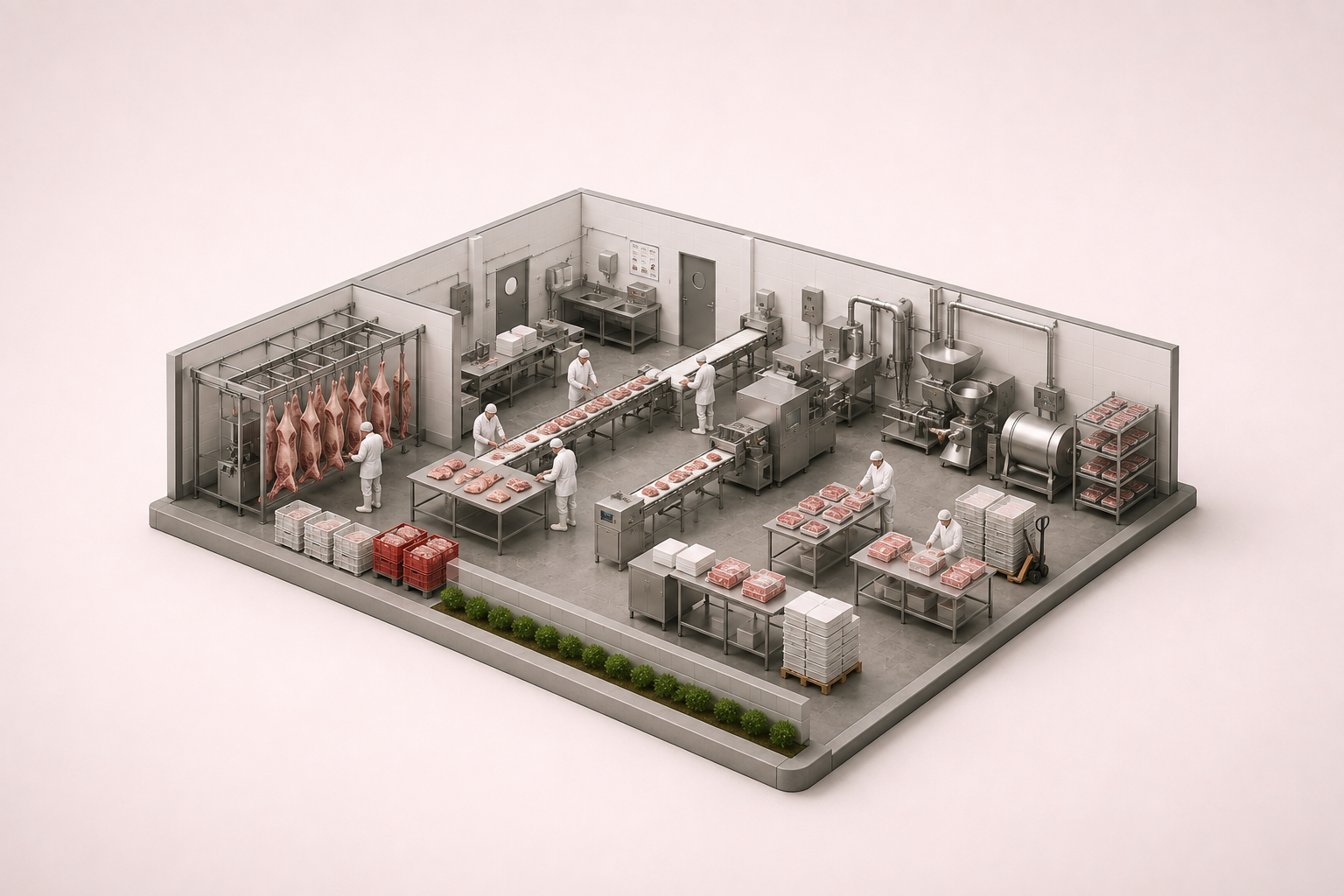
The meat industry operates under more pressure than ever. Tighter regulations, rising production costs, and customers who want to know exactly where the meat on their plate comes from - all of it raises the bar for producers. In this environment, traceability (the ability to know exactly where each product came from and where it went) is no longer just a regulatory requirement; it is a competitive advantage. And the most effective tool to achieve it is connected, purpose-built software for meat production and tracking.
The Hidden Cost of Disconnected Systems
Margins in meat processing are thin - typically between 1% and 3%. In those conditions, even the smallest inefficiency isn't an inconvenience; it's unsustainable. A mere 1% error in yield on a line processing 500 head per day can mean tens of thousands of euros in lost value every month.
The problem is that these losses are rarely visible in time when the business runs on spreadsheets, paper records, and systems that don't talk to each other:
- Yield is tracked with a delay. Without real-time data, you react only after the damage is done, instead of correcting mid-shift.
- Micro-stoppages stay invisible. Brief interruptions (a jammed label, a sensor, a sanitation delay) account for up to 20% of unmeasured downtime in plants, according to industry research.
- Inventory ages and spoils. Manual tracking leads to poor rotation (FIFO/LIFO), scrap, and a lack of lot-level visibility.
- Planning is disconnected from sales. The result is overproduction of some items and shortages of others during peak season.
According to the Food and Agriculture Organization (FAO), nearly 20% of global meat production is lost every year due to inefficiencies and food-safety issues in the supply chain. That is the scale of the problem good traceability directly attacks.
What Purpose-Built Software Delivers
A solution designed for the meat industry centralizes and automates data across the entire chain. Every product batch is clearly identified, documented, and accessible in real time - from the animal's birth to final distribution. Instead of the same data being retyped in multiple places, information flows on its own between farm, slaughterhouse, production, storage, and retail.
Companies gain visibility into key data points:
- animal health and rearing history,
- slaughter and processing records,
- temperature and storage monitoring,
- transport and distribution timelines.
This end-to-end visibility helps teams spot where efficiency is lost, anticipate disruptions, and make faster, better-informed decisions.
Faster, Cheaper Recalls
One of the most powerful effects is recall management. When a safety issue arises, the system instantly identifies the affected batch and traces its path through the chain. That means isolating and removing only what is actually impacted, instead of broad, costly recalls that erode trust and reputation.
The difference in speed is dramatic. After implementing such a system, one large producer cut its batch-trace check from two and a half to three hours down to under one hour for a raw-material audit, and to under 15 minutes for a finished-product audit. Without centralized traceability, such investigations can take days - and the average cost of a meat product recall in North America exceeded $10 million in 2022, before counting brand damage.
Real-Time Data = Continuous Improvement
Perhaps the most underrated benefit of a connected system is the rich stream of real-time data. Every weigh-in, every downtime event, and every quality check is logged, so management gets accurate KPIs from the plant floor on executive dashboards. If one line consistently underperforms on yield, it shows immediately and can be corrected - through training or equipment adjustments - and the effect is tracked through the same data.
Industry figures show how much this is worth:
- A MESA International study found, on average, a 22.5% improvement in total cost per unit and a 19.4% increase in net profit margin at companies that adopt these systems.
- A 2023 Deloitte study found that processors using cold-chain tracking reduced perishable inventory waste by 12-18%.
- Plants report up to 15% savings in procurement and storage thanks to better rotation and less overstocking.
- The largest among them, such as Cargill's plant in China, save over a million dollars a year with these systems through higher yield, more accurate inventory, and more efficient operations.
Beyond Compliance: A Competitive Edge
Investing in a purpose-built system doesn't just help meet regulations. It brings agility, data-driven decision-making, and market differentiation. By connecting production with sales and inventory, data silos and manual errors are eliminated, decisions are made faster, and employees get clear targets and instant feedback on performance.
In an industry of thin margins and ever-stricter audits, real-time traceability stops being a luxury and becomes a condition for sustainable operations. The companies that recognize this don't abandon their existing tools - they augment them with the right system for the plant floor, turning everyday complexity into clarity, and clarity into profit.
Tags
Need this in practice?
Get a proposal